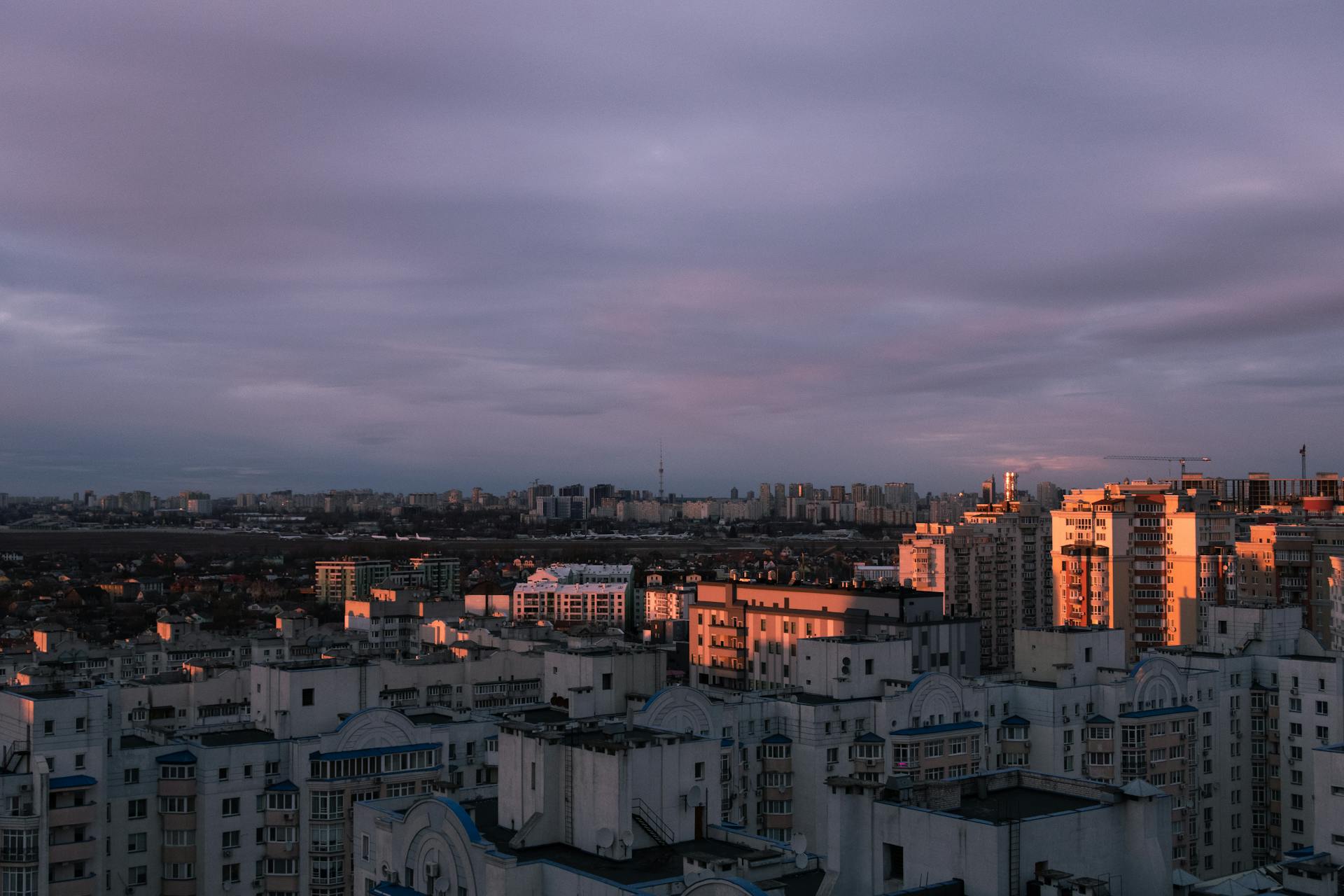
Across dozens of cities the destruction of mid-rise apartment buildings has left millions without stable shelter and has erased decades of urban density. Rebuilding those blocks is not a side project of recovery; it is the core of ukraine multifamily housing rebuilding because apartments house the majority of the urban workforce, the elderly, and young families who keep local economies running.
Counting the Empty Floors Left Standing
Satellite images and municipal surveys show entire residential districts reduced to shells. In Mariupol, Kharkiv, and Bakhmut the loss is measured in thousands of individual flats rather than freestanding houses. Each damaged panel building once held fifty to two hundred households. Restoring even half of those units restores more housing stock than any suburban subdivision could deliver in the same timeframe.
Early estimates compiled by international lenders already place residential damage above fifty billion dollars. Readers who want deeper numbers can consult International Monetary Fund publications that track fiscal space for reconstruction. Those reports underline that multifamily stock must be prioritized simply because so many citizens lived that way before the war.
Choosing Which Districts Receive Cranes First
Not every street can be rebuilt at once. Local councils weigh proximity to remaining jobs, schools, and transit lines. A district with intact utilities and a functioning hospital ranks higher than a remote neighborhood still laced with mines. This triage protects scarce capital and labor while giving returnees a chance to resume normal routines quickly.
Foundation has mapped several of these priority zones inside its broader analysis called The Ukraine Reconstruction Investment Thesis. The same logic appears across donor scorecards: density plus existing infrastructure equals faster social return.
Supply Chains for Panels and Elevators
Most Soviet-era blocks used prefabricated concrete panels. Modern replacements need higher insulation values, earthquake-resistant joints, and elevators that meet current accessibility rules. Factories in western Ukraine and neighboring countries are retooling lines, yet raw cement, rebar, and glass remain tight. Import corridors through Poland and Romania keep materials moving, but truck queues and border fees still raise unit costs.
Skilled crews present another bottleneck. Many construction workers left the country; those who stayed often lack certification for energy-efficient systems. Apprenticeship programs funded by European partners are expanding, yet graduation rates lag behind the volume of damaged buildings. Readers seeking project-level detail can browse the Ukraine archive for ongoing case studies.
Blending Public Grants With Private Capital
Pure grants cannot cover the full bill. Blended finance that pairs concessional loans with private equity is emerging as the practical path. Municipal bonds, recovery funds, and targeted guarantees reduce risk enough for commercial banks to participate. One instrument gaining attention is the category of instruments explained in Understanding Ukraine Reconstruction Bonds.
The World Bank has already earmarked packages that can backstop housing loans for cooperatives and condominium associations. Parallel work by the OECD examines governance standards so that funds reach actual construction sites rather than intermediate layers. Private developers who enter these partnerships must accept longer payback periods but gain first-mover access to large, pre-cleared sites.
Designing Stairwells That Survive Shelling
New multifamily buildings cannot simply copy pre-war blueprints. Engineers now insert reinforced cores, redundant staircases, and basement shelters sized for every resident. Window systems use laminated glass that resists blast pressure yet still admits daylight. These features add roughly ten to fifteen percent to hard costs, yet they lower insurance premiums and reassure returning families.
Energy performance receives equal weight. Double-wall construction, heat pumps, and rooftop solar cut utility bills that once strained household budgets. When entire blocks share a district heating upgrade, the savings compound. Guidance on larger networked systems sits inside the companion piece on Infrastructure Investment Opportunities in Ukraine.
Keeping Families Near Their Jobs and Schools
Temporary container housing often sits far from employment centers. Permanent multifamily projects succeed when they reopen next to factories, hospitals, and kindergartens that still operate. Mixed-use ground floors for grocery stores and clinics further reduce daily travel. Local planners therefore insist that reconstruction permits include transit links and green space within a ten-minute walk.
Tenant associations that owned their flats before the war retain legal priority. New legal frameworks prevent speculative buyouts of ruined buildings, ensuring original owners can reclaim space once walls rise again. Questions about ownership paperwork appear often; the FAQ (frequently asked questions) page walks through the most common document trails.
Tracking Rebuild Outcomes Year by Year
Progress is measured in completed square meters, reconnected utility meters, and re-occupied households, not just funds pledged. Digital dashboards maintained by city halls already publish monthly tallies. Independent audits compare those figures against satellite verification to reduce under-reporting. Over time the data set will reveal which financing mixes and construction methods deliver the highest occupancy rates.
Anyone who wants to follow live updates or channel capital into vetted projects can start at the Foundation Ukraine hub and move to the operational Foundation Ukraine platform. Both channels surface verified multifamily schemes ready for partnership. Sustained attention from global markets will determine whether ukraine multifamily housing rebuilding finishes in a decade or stalls for a generation.
Readers comparing notes on Rebuilding Multifamily Housing in Ukraine in global markets should keep one dated source list and one named owner for updates so the next review of Rebuilding Multifamily Housing in Ukraine does not restart definitions. Article reference world-150.
If two teams disagree about Rebuilding Multifamily Housing in Ukraine, write the disagreement in one paragraph with the evidence each side trusts before any money language expands around Rebuilding Multifamily Housing in Ukraine. Article reference world-150.
A short refusal note for Rebuilding Multifamily Housing in Ukraine should say what was parked, why it was parked, and who can reopen the file on Rebuilding Multifamily Housing in Ukraine after new facts arrive in global markets. Article reference world-150.
Readers comparing notes on Rebuilding Multifamily Housing in Ukraine in global markets should keep one dated source list and one named owner for updates so the next review of Rebuilding Multifamily Housing in Ukraine does not restart definitions. Article reference world-150.
If two teams disagree about Rebuilding Multifamily Housing in Ukraine, write the disagreement in one paragraph with the evidence each side trusts before any money language expands around Rebuilding Multifamily Housing in Ukraine. Article reference world-150.
A short refusal note for Rebuilding Multifamily Housing in Ukraine should say what was parked, why it was parked, and who can reopen the file on Rebuilding Multifamily Housing in Ukraine after new facts arrive in global markets. Article reference world-150.
Readers comparing notes on Rebuilding Multifamily Housing in Ukraine in global markets should keep one dated source list and one named owner for updates so the next review of Rebuilding Multifamily Housing in Ukraine does not restart definitions. Article reference world-150.
If two teams disagree about Rebuilding Multifamily Housing in Ukraine, write the disagreement in one paragraph with the evidence each side trusts before any money language expands around Rebuilding Multifamily Housing in Ukraine. Article reference world-150.
A short refusal note for Rebuilding Multifamily Housing in Ukraine should say what was parked, why it was parked, and who can reopen the file on Rebuilding Multifamily Housing in Ukraine after new facts arrive in global markets. Article reference world-150.
Related Foundation reading: Open Source Contributor Signaling: Demand Signals Institutions Watch and ESG Transition Risk in Long Duration Assets: Infrastructure Readiness .
Timeless Value. Perpetual Legacy.