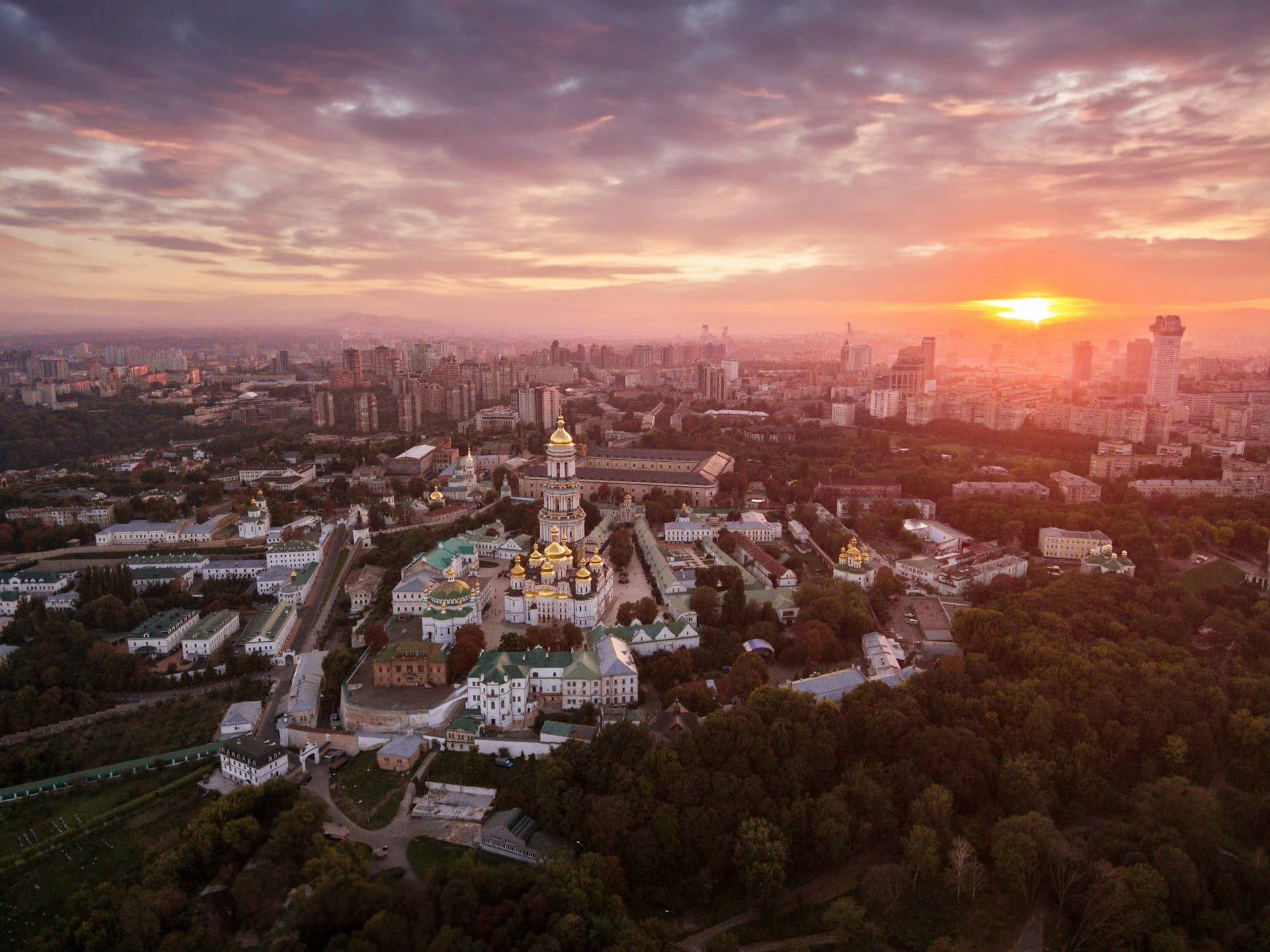
The Dnipro industrial corridor runs through a dense belt of factories, river ports, and energy nodes in central and southern Ukraine. Global capital already compares this stretch to older manufacturing arteries because its mix of heavy industry, grain elevators, and Black Sea access creates a ready template for recovery capital. Readers who track The Ukraine Reconstruction Investment Thesis will recognize the same logic that treats physical corridors as multi-decade balance-sheet assets rather than short-cycle trades.
Physical Assets That Define the Corridor Today
Steel mills, ferroalloy plants, and machine-building yards still line the Dnipro and its tributaries. These facilities sit near iron-ore deposits and thermal power stations that once supplied a large share of Soviet-era heavy output. Even after wartime damage, residual capacity and skilled labor pools remain larger than those of many peer regions in Eastern Europe. The river itself functions as a low-cost spine for bulk cargo once dredging and lock systems are restored.
Port terminals at the southern end link the river system to deep-water Black Sea routes. Grain, oilseeds, and metal products can move by barge then transfer to ocean vessels without the long road hauls that raise costs elsewhere. That geographic gift is rare among landlocked industrial belts and explains why global traders keep the corridor on active watch lists.
Steel and Energy Density Versus Peer Regions
Compared with Germany’s Ruhr, the Dnipro zone once produced similar volumes of flat steel and rolled products per square kilometer. Unlike the Ruhr, however, it still holds underutilized blast furnaces that can restart with lower capital intensity than greenfield projects in Asia. Energy intensity is higher than the European average, yet proximity to coal and gas pipelines keeps the cost structure competitive when fuel prices normalize.
The OECD tracks industrial energy efficiency across member and partner economies; the corridor’s figures historically sat between those of Poland’s Upper Silesia and Turkey’s coastal steel clusters. That middle rank matters because it signals both catch-up potential and realistic upgrade paths rather than pure fantasy restarts.
Logistics Nodes Against Rhine and Pearl River Benchmarks
The Rhine corridor thrives on container barges and dense rail feeders that feed Rotterdam. The Pearl River Delta relies on high-volume coastal shipping and just-in-time electronics supply chains. Dnipro logistics sit closer to bulk-commodity models: ore, grain, and semi-finished steel move best by river barge and short-sea feeders. Once inland waterways reopen fully, ton-mile costs can undercut pure road or rail options that dominate many post-Soviet peers.
Containerization remains underdeveloped, yet that gap itself attracts capital. Modern terminals and multimodal yards could capture value that now leaks to longer land routes through neighboring countries. Operators studying agricultural flows will find useful parallels in Agricultural Export Capital in Ukraine: City Pair Analysis for Allocators, where city pairs already illustrate how corridor improvements lift export margins.
Commodity Chain Upside for Global Buyers
European steel buyers currently rely on a mix of domestic mills and imports from Asia. A revived Dnipro corridor shortens that supply chain and reduces freight volatility. Fertilizer and chemical plants along the same river can feed European agricultural markets with lower carbon footprints than long-haul seaborne product. These linkages turn the corridor into a strategic hedge for importers who dislike single-source risk.
The World Bank regularly models transport-cost elasticities for bulk goods; even modest cuts in barge freights lift farm-gate prices enough to accelerate land-use recovery. That feedback loop is why commodity traders treat corridor restoration as more than a local story.
Capital Market Signals and Interest-Rate Sensitivity
Industrial corridors absorb patient capital because cash flows ramp over years, not quarters. When the US Federal Reserve holds policy rates elevated, discount rates rise and long-duration projects face higher hurdles. Yet the same environment rewards assets with hard-asset collateral and export-linked revenues, both of which the Dnipro zone can offer once insurance and security frameworks stabilize.
Readers who examine legacy assets in other sectors often consult pieces such as Art as a Legacy Balance Sheet Asset: Global Market Comparison for clues on how scarcity and provenance create durable value. Physical industrial corridors share that scarcity trait: river frontage, existing rail gauges, and skilled labor cannot be relocated overnight.
Policy Benchmarks from Multilateral Lenders
International lenders publish detailed recovery frameworks that allocate funds by sector and geography. The corridor appears repeatedly in those documents because it concentrates multiple priority sectors: metals, energy, logistics, and agribusiness. Allocators who follow International Monetary Fund publications will notice conditionality language that favors transparent procurement and anti-corruption safeguards precisely in such high-visibility zones.
The Bank for International Settlements monitors cross-border banking exposures that often underwrite trade finance for steel and grain. Any expansion of those exposures into the corridor will show up first in BIS consolidated statistics, giving early signals of institutional appetite.
Reading Local Capacity Against Global Peers
Workforce density remains high relative to many deindustrialized European districts. Technical institutes still graduate metallurgists and river pilots whose skills transfer directly to modernized plants. That human capital stock is the least portable asset on the map and the hardest for rival corridors to replicate quickly. Foundation teams track these labor metrics inside the broader Ukraine archive so that capital allocators can compare headcount quality rather than just headline steel tonnage.
Security remains the binding constraint. Insurance markets price river and port risk higher than peacetime European averages, yet the premium compresses whenever cease-fire durability improves. Investors who want a single entry point into Foundation’s Ukraine work can start at Foundation Ukraine and then move to the live deal flow on the Foundation Ukraine platform.
Practical Comparison Checklist for Non-Experts
Three questions separate serious corridor analysis from tourist-level commentary. First, does residual plant capacity exceed replacement cost of greenfield builds elsewhere? Second, can barge and short-sea freights undercut current land routes by a double-digit percentage once dredging finishes? Third, do multilateral policy documents treat the zone as a priority cluster rather than a scattered list of small towns? Affirmative answers place the Dnipro industrial corridor among the higher-conviction recovery geographies.
Anyone still uncertain about terminology or data sources can consult the Foundation FAQ (frequently asked questions) for plain-language definitions of terms such as multimodal yard, blast-furnace restart, and trade-finance exposure. Those definitions keep the conversation grounded when markets heat up and marketing language starts to outrun engineering reality.
See also Foundation Ukraine platform.
Readers comparing notes on Dnipro Industrial Corridor Potential Global Market in global markets should keep one dated source list and one named owner for updates so the next review of Dnipro Industrial Corridor Potential Global Market does not restart definitions. Article reference world-374.
If two teams disagree about Dnipro Industrial Corridor Potential Global Market, write the disagreement in one paragraph with the evidence each side trusts before any money language expands around Dnipro Industrial Corridor Potential Global Market. Article reference world-374.
A short refusal note for Dnipro Industrial Corridor Potential Global Market should say what was parked, why it was parked, and who can reopen the file on Dnipro Industrial Corridor Potential Global Market after new facts arrive in global markets. Article reference world-374.
Related Foundation reading: Inflation Regime Effects on Family Portfolios: A Beginner's Institutio.
Timeless Value. Perpetual Legacy.