In this exclusive interview, Richard Ohebshalom, founder of Foundation, shares his deeply personal journey. He discusses his childhood lessons from his father, his unconventional education, key mentors, major setbacks, family life in Israel, and the creation of Foundation with partners Valeriia Akatova and Damien Soitout. Richard explains how his experiences shaped the philosophy of Timeless Value and Perpetual Legacy across New York, Israel, Ukraine, and Foundation Incubator. The conversation offers clear insights for entrepreneurs, investors, and anyone passionate about long term impact.
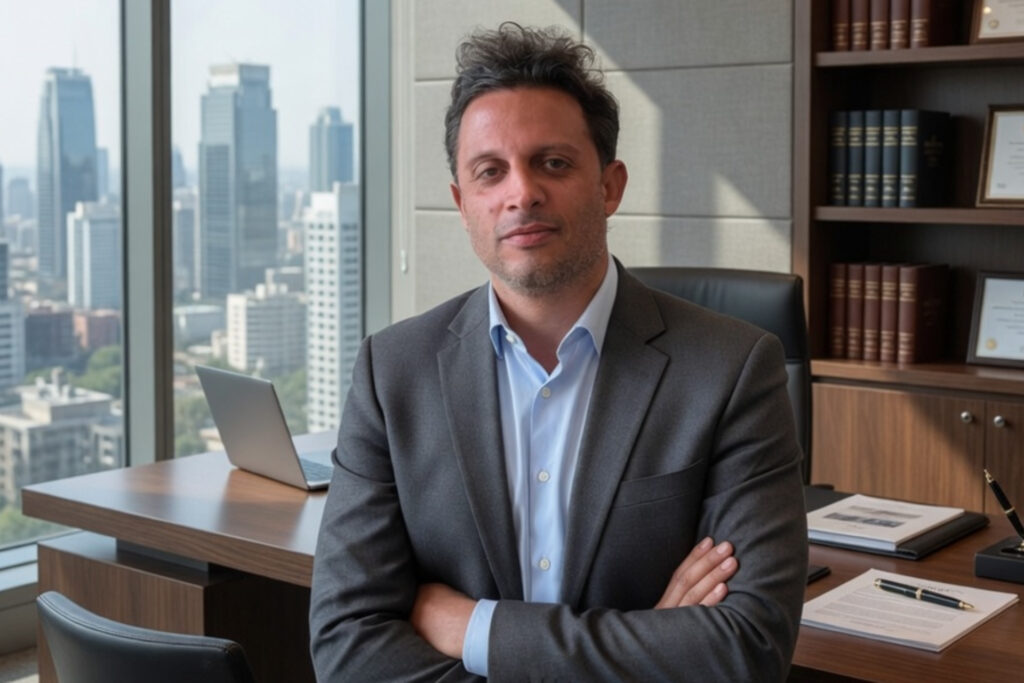
Richard, thank you for speaking with us. Real estate seems to have been part of your life from a very young age. Can you tell us about your childhood and the influence of your father Fred Ohebshalom?
Richard Ohebshalom
Real estate was the air I breathed from the moment I could walk beside my father, Fred Ohebshalom. He came from Iran with nothing. No connections. No capital. No roadmap. He was the hardest working man I have ever known. Everything I know about how to read a building and how to read a deal began with him. He used to take me out of school as a young boy to learn the oriental rug business that my grandfather and his two brothers had started before moving into real estate. I did everything a laborer would do at the shop. The bazaar was the first business school I ever attended, and the lessons it taught patience, instinct, the ability to read a person across a table without saying a word cannot be taught in any institution today. From there he taught me to size up a building with my own feet. Walk the perimeter. Count the windows. Read the street the way a doctor reads a patient for what is not visible, for what the numbers will never tell you. He had built a model of rent stabilization and apartment reconstruction ahead of its time. He acquired buildings. He repositioned them. He raised rents through genuine improvement, not financial engineering. He never built for the cycle. He built for the generation. That standard became mine. What I built with it would become my own.
Your formal education took an unconventional path. How did your academic journey and early travels shape the way you think about business and life today?
Richard Ohebshalom
My education did not begin where the systems around me said it should. In high school I held a B minus average. The SAT did not say much about me and I did not say much back to it. The only school that took the chance was the University at Albany. I started there my first semester and finished it with a 4.0 the first time in my life I understood what focused work felt like applied to ideas instead of avoidance. Albany was not the destination. It was the door. I transferred to The George Washington University, majored in business and philosophy, held a 3.7 across the rest of my time there. The kid the SAT had written off had quietly become a serious student of his own choosing. After graduating I bought a one way ticket. Two years in India, the second high in the mountains in a town called Manali. From there to Cambodia, Vietnam, Thailand, Australia for two more. Hundreds of journals. The Eastern wisdom that shaped how I think about value, about people, about what life is actually for. The seeds of Cure Hero, the Stone Tree Fund, and what would eventually become Foundation Incubator were not conceived in a boardroom. They were written in those journals, alongside everything I would eventually do in real estate. What I wrote into those journals was not only a set of platforms. It was a life. The love I would eventually build with my wife. The marriage. Becoming a father. The abundance that has come into every part of my world. Every dimension of what I am surrounded by today was first put down on paper in those mountains by a young person who had no evidence yet that any of it was possible. There is a child somewhere right now who comes from nothing, with nothing, whose parents have told them they are nothing and that child is capable of building exactly what I have built if someone, anywhere, gives them permission to believe it is possible. That child is the entire reason Foundation Incubator exists. The platform was not built for the person the world has already noticed. It was built for the person who has been told their whole life that they should not bother trying. If you are that person reading this, you are wrong about yourself. You can have all of it. You just have to start writing it down. Seven years after I first stepped into Asia, I was back in New York. I wanted Columbia construction administration, architecture, planning, and preservation. I did not have the conventional credentials. I made a deal with the dean. Admit me, and I will hold a 4.0 my first semester. If I do not, take the seat back. I held the 4.0. I learned how cities actually work. Buildings exist within the fabric of a place and preservation is not constraint but entry. The landmarked asset that conventional capital sees as a problem is exactly what creates basis advantage for the operator who can navigate it. Every door I walked through was a door I was told I would not walk through. That is the most useful credential I carry.
You mentioned key mentors in New York who taught you the realities of development. Who were they and what lasting lessons did they impart?
Richard Ohebshalom
The education that shaped me most happened on the streets of New York working for Jed Manocherian at Pan Am Equities. Chelsea then was a different world from Chelsea today. Gritty. Overlooked. Decided unworthy of serious institutional attention. Jed looked at Chelsea and saw what it would become before there was any evidence anyone else recognized as proof. The Caroline was his first project, built in a neighborhood nobody yet believed in. He introduced me to Boris Figenbaum, the superintendent of construction at KBF. Boris was the first person to ever teach me how a building actually gets built. Not conceptually. Physically. The sequencing. The subcontractors. The problem solving that happens in real time when plans meet reality and reality always wins. I carry him with me every time I walk a site. Jed showed me the strategy that has defined my career. Identify groups of buildings sitting beside one another. Acquire them quietly through direct relationships with each owner. Combine the zoning. Unlock a development site capable of supporting a tower that reshapes a skyline. The value creation does not happen at the point of sale. It happens at the point of assembly.
Later you returned to your family company, Empire Management. What changes did you help bring about there?
Richard Ohebshalom
When I came back to my fathers company, Empire Management, I brought everything Jed and Boris and the others who had taken me in had taught me. What I found was a world entirely outsourced. Development. Architecture. Legal. Accounting. Zoning. Brokerage. Every critical function handled by outside parties. When you outsource your most critical functions, you outsource your most critical decisions. As difficult as it was a young man coming into a world that did not particularly want to listen to a young man I helped rebuild Empire from the inside out. In house development. In house architect. In house attorney. In house accountants and zoning specialists. New technology stack. An in house brokerage focused on off market deal sourcing direct relationships with owners on the streets of New York, the way I had been taught. When every critical function is in house, you control timeline, quality, and outcome. You see opportunities the outside cannot see because you are inside the process at every level. And when something goes wrong as it always does in complex situations you have the internal capability to solve it rather than wait for an outside party to respond. That model became the blueprint for everything that came after.
In 2010 you founded Pink Stone Capital Group. What was your vision for that platform?
Richard Ohebshalom
In 2010 I founded Pink Stone Capital Group as my own platform. Fifteen years in the most competitive real estate market in the world. The model was the vertically integrated discipline I had rebuilt at Empire, applied without compromise. Off market sourcing. In house execution. Discretion over visibility. Precision over speed. Governance built before scale, not after. Across those fifteen years I assembled a Manhattan portfolio that spanned every consequential asset class office, residential, retail, hospitality, mixed use in the most competitive submarkets of the most demanding real estate market in the world. The track record reflects the philosophy. 250 Fifth Avenue, sourced and structured and developed through the full New York City Landmarks Preservation Commission process into a Michelin recognized hospitality destination a transformation no operator without that specific regulatory capability could have produced. 8 Carlisle at 111 Washington Street, originated and entitled and structured into the joint venture with Grubb Properties that is now completing one of the most significant residential towers in Lower Manhattan. The Manhasset Miracle Mile. 3 West 36th Street. A portfolio built one relationship and one building at a time, scaled to a level that placed Pink Stone among the most consequential privately held real estate operations in the city. Pink Stone was where the principles were tested under live pressure. They held.
You have spoken about a high school teacher who changed your life. Can you tell us about Elizabeth Metz and how she influenced your later work?
Richard Ohebshalom
In high school I had a teacher who saw something in me that I had not yet seen in myself. Her name was Elizabeth Metz. She taught me social studies in ninth grade and again in eleventh. It was the only subject I cared about across my entire high school career, and the reason was not the subject. It was her. Elizabeth Metz was the kind of human being who took the time. The time to look at a kid the system had quietly written off and ask the questions no one else was asking. The time to help me with school and the time to help me with everything outside school that a teenager has no map for. She saw me before I saw myself, and she held that vision with such clarity and such patience that I started to believe it was real. She passed away from cancer just before I graduated high school. I have carried her with me every year since. What she gave me has never left me. The conviction that the most powerful thing one human being can do for another is to see their potential before they see it themselves. That a teacher, at the right moment, in the life of a child who has not yet been given permission to imagine what they are capable of, is not a profession. It is a parallel parent. Everything I have built since carries her fingerprint. Cure Hero began as the first attempt to scale what one teacher had given to one student into a system that could give it to every child in the world. Foundation Incubator is the institutional version of the same instinct, built two decades later, with the resources to make it real across generations. This is for her. All of it.
You created Cure Hero in 2013. What was the core idea behind it?
Richard Ohebshalom
In 2013, under Pink Stone Capital, I built Cure Hero. The premise was a question. Facebook was uniting friends. LinkedIn was connecting workers. Twitter was giving the masses a megaphone. What if the most connective technology in the world was structured not to generate profit for shareholders but to generate impact for the people who needed it most? Cure Hero was a platform for kids ten to fourteen children whose ideas were not yet inhabited by cognitive bias. Gaming, social networking, and social good in one system. The vision underneath the platform was about the shape of childhood itself. Some kids grow up looking up to the football player or the cheerleader. That has been the cultural hierarchy for as long as anyone can remember. But there is another kid sitting in another room the one who was never going to be the football player or the cheerleader, the one the system labels a nerd or a misfit or worse sitting on ideas that could change the world, with no platform to express them and no audience telling them their ideas matter. Cure Hero was built to make that kid the new hero. The Cure Hero. The kid written about. The kid other kids look up to. The kid invited to the table because of what they imagined, not because of what they look like or who their parents are. The mechanic was the redefinition of points. Every prominent game at the time rewarded users with points that had no real world value. Cure Hero socially monetized them. We called them hearts. A heart had real world consequence. The signature application was the goat. Childhood malnutrition rates in rural indigenous communities of Guatemala approached eighty percent. One goat changes a childs life. Players grew and collected goats inside the game. Once a player collected ten in game goats, a real goat was gifted to a family in Guatemala through Save the Children. The game was the funding mechanism. Gameplay translated directly into outcomes that mattered. The vision extended much further than the goat. Cure Hero was designed to source ideas from children at scale across every category that humanity is still struggling with medicine, science, mathematics, art, energy, food, peace. A million children might submit ideas about how to cure a particular cancer. Most would be the ideas children have. One child sticking a beeper of orange juice into a patients arm. Another so naive it would make an oncologist smile. But the millionth child submits something a researcher at Sloan Kettering or MD Anderson reads and recognizes an angle no adult thought of because no adult thinks the way that child thinks. Cure Hero was the platform that surfaced that idea. The institution that took it seriously. The system that put it in front of the people with the resources to bring it to life. And the deepest layer was the connection between the children themselves. A child in China and a child in Peru, on the same online platform, working together on the same problem, surfacing a solution to world hunger or to a regional water crisis or to a peace negotiation that adults have failed to resolve for fifty years. The children of one country inspiring the children of another, across borders the adult world has built but the child mind has never accepted. The DNA in Foundation Incubator is identical. The scale is different. The conviction is the same.
Around the same time you also conceived the Stone Tree Fund. What was the idea there?
Richard Ohebshalom
Around the same period I conceived of the Stone Tree Fund. A universal investment fund that would make an investment on behalf of every person born globally each day. Unconditional cash transfer principles applied at structural scale. Donors could reinvest their share. A movement of universal giving where no individual was excluded. The instinct was the same instinct behind Cure Hero and behind everything I have built since. Structure incentives so they align with human dignity rather than extraction.
You have spoken about a difficult chapter after building Pink Stone. What happened and how did you respond?
Richard Ohebshalom
There are chapters of a life that do not fit a linear narrative of ascending achievement. I have lived one. After building something significant, it came apart. Not gradually. Suddenly. The way things built on external foundations always come apart when the conditions change. I lost the platform. I lost the certainty. I lost the version of myself defined by what I had built rather than by who I was. Most people in that position retreat. They accept the narrative the market writes about them when they go quiet and spend the rest of their lives managing the distance between who they were and who they became. I did not stop. I went to Israel.
How did your time in Israel become a period of rebuilding?
Richard Ohebshalom
Not to escape. To rebuild. To strip everything back to the fundamental discipline that no market condition could ever take away street level judgment, construction site knowledge, back of envelope precision. In Israel I learned to do the work of fifty people as one. Success creates systems. Systems create dependencies. Dependencies create distance between the principal and the work. In Israel, stripped of all of it, I closed that distance permanently. I sourced alone. I underwrote alone. I negotiated alone. I structured alone. I executed alone. The most valuable thing a principal can possess is not a team or a platform or a track record. It is the ability to operate without any of those things and still produce outcomes none of those things could have produced without you. The phoenix does not rise because the conditions improve. It rises because it carries within it something no fire can consume.
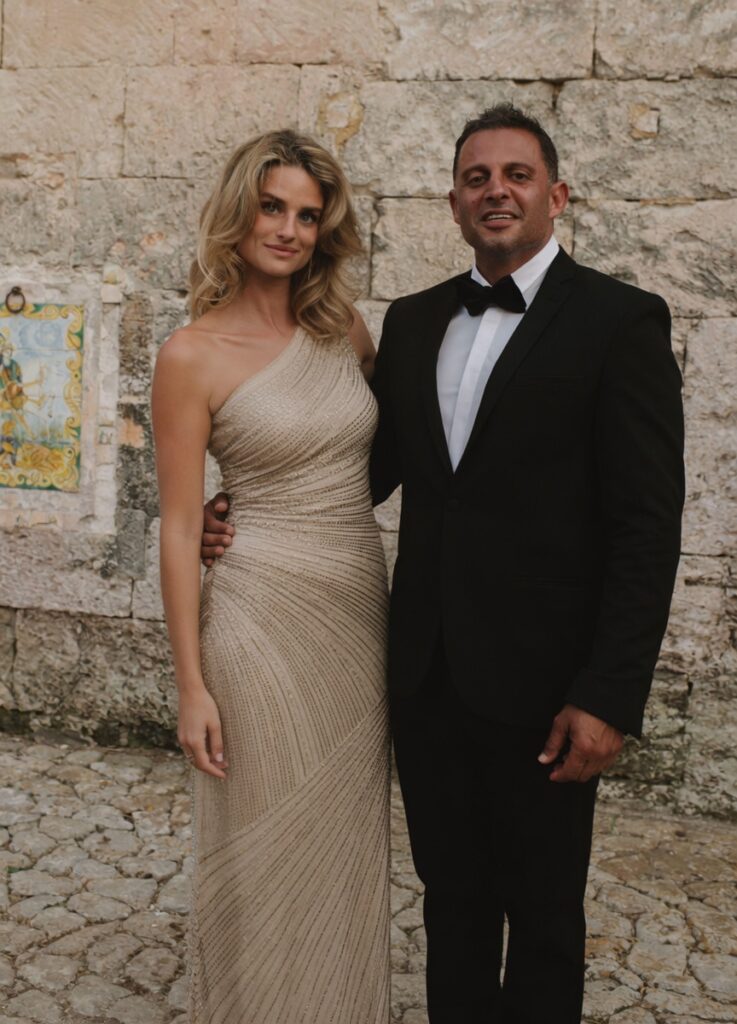
Today you live in Tel Aviv with your family. How has family life influenced your work? Richard Ohebshalom enjoying family life
Richard Ohebshalom
The four of us May, Eve, Raphael, and me have built a life in Tel Aviv that sits a long way from the New York hustle and a long way from the kid who wrote a one way ticket to India in his early twenties. A quieter life. A more honest one. The wonders of it are the ordinary ones. The morning. The school run. The Friday night table. The rhythm of a family that is together because together is the only place we want to be. May and I met in Paris fourteen years ago. I was from New York. She was from Israel. There was nothing in either of our trajectories that should have led to a meeting in a cafe in Paris on the night that we met. Two people from two worlds with nothing aligning the geography of their lives until that exact moment. The universe made the call. We answered it. Against every odd that could have kept us apart, we fell in love and we have spent every year since building a life together that neither of us could have written into a journal because neither of us would have dared. Israel operates under pressure most places in the world do not experience. Working through sirens. Making decisions while sheltering with your children. The conditions of daily life include the possibility of real danger, and the response is not paralysis but continuation. You stop overcomplicating things. You become precise about what matters and impatient with everything that does not. Resilience is not a trait you are born with. It is a discipline you choose every single day. That discipline is in everything Foundation does.
How did all of this lead to the creation of Foundation?
Richard Ohebshalom
Foundation was not a single decision. The realization arrived in Tel Aviv after I had operated alone long enough to see what I was actually doing. The same instinct that walked Manhattan buildings was now reading streets in Tel Aviv and pattern matching against Kyiv. The pattern was identical across all three. The opportunities that mattered existed before institutional capital had organized around them. Before pricing reflected reality. Before consensus formed. The question became whether this could be systematized. The answer is Foundation. A private real estate and legacy advisory platform spanning New York, Israel, and Ukraine, with capital and human capital verticals that compound on top of the real estate base. Not a firm in the conventional sense. A system. Timeless Value. Perpetual Legacy. That is not a tagline. It is the operating philosophy that has guided every decision across twenty five years.
You work with two key partners, Valeriia Akatova and Damien Soitout. How did that partnership come together?
Richard Ohebshalom
A platform of this scope cannot be built alone. The two operators standing beside me are not employees. They are principals. They are family. Three people. Three continents. Three lives that had no logical reason to converge and converged anyway. Valeriia Akatova entered the partnership from inside a country at war. While the world watched Ukraine on a screen, she was building institutional real estate infrastructure on the ground in conditions most operators would never accept and that no platform headquartered in New York or London could replicate from a distance. The capability she brings is not a credential. It is a calibration. Judgment under dislocation. The specific quality of mind that sees opportunity where most see paralysis. There is no second person in the world who could do what she does in that market. Damien Soitout entered as the rare technologist whose ambition matched the institutional standard the platform required. AI powered intelligence systems. Compliance architecture across more than one hundred and sixty countries. Institutional reporting and investor management built to the standard the worlds most demanding capital requires. And Incubator OS the operating system, not the application, that turns three audiences into one connected system. He is not a CTO. He is the principal whose architecture defines what the platform can become. How we found each other was not a recruiting process. It was something closer to inevitability. Three people who had each spent years building toward something the world had not yet asked for, recognizing in each other the same conviction, the same standard, the same refusal to settle. The personal bond and the professional alignment are not two bonds. They are one bond. The failure of any one of us is the failure of all three. The success of any one of us is the success that compounds across the platform for the rest of our careers. The benchmark for what Foundation is being built to become is not the largest real estate platform in the world. The largest platforms are extraordinary at what they do and constrained from doing what we do. The benchmark is the institutions that have endured across generations because the alignment of the people who built them was complete from the first day. Apple was three people in a garage. Berkshire was one person and one partner who never separated. The institutions that endure are the ones with the most aligned founding partnership. We did not plan this. We recognized it. And then we built it.
Looking ahead, what does the next decade hold for Foundation?
Richard Ohebshalom
In five to ten years Foundation is a recognized institutional investment platform with a track record across New York, Israel, and Ukraine that speaks for itself. Foundation Incubator has produced its first generation of institutional quality founders and operators people who entered the platform before the market knew they existed and built companies that matter. The combination of disciplined real estate stewardship across three of the worlds most compelling markets and systematic investment in exceptional human capital creates something that compounds across generations. The buildings we develop become the environments where the next generation of builders works and lives. The founders we structure become the operators who create value in those environments. That loop is what perpetual legacy actually means.